
Taino Palermo
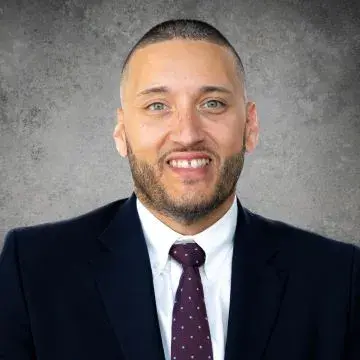
Professor Taino J. Palermo is the Director of the Business Law Clinic, where he supervises student attorneys providing free transactional legal services to small businesses and nonprofit organizations. His teaching and practice focus on transactional lawyering, nonprofit and business law, federal Indian law, tribal sovereignty, and Indigenous rights.
Professor Palermo is also the Co-Founder of the Center for Indigenous Rights, where he directs legal services and serves as lead counsel assisting Indigenous communities with legal and policy matters before state, federal, and international bodies. He also serves as Faculty Advisor for the American Indian Law Student Association. Before joining the full-time faculty, he practiced at Barton Gilman LLP, advising schools, nonprofit organizations, businesses, and other institutional clients on education law, nonprofit law, business operations, governance, and general counsel matters. He previously served as a judicial extern to the Honorable William E. Smith of the United States District Court for the District of Rhode Island.
Before entering legal practice, Professor Palermo worked extensively in higher education, community development, organizational leadership, and program design. He previously served as a Program Director at Roger Williams University and is a founding faculty member of College Unbound. His scholarship examines federal Indian law, tribal sovereignty, Indigenous land rights, constitutional law, and the relationship between law and social institutions.
Books
Chapter 1: Colonization, Race and the foundations of American law. (Aspen Publishing, 2025)
Articles
From Tribal Sovereignty to Incomplete Allegiance: Trump v. Barbara and the Fragility of Birthright Citizenship, Roger Williams University Law Review (forthcoming 2027).
Returning Home and Restoring Trust: A Legal Framework for Federally Non-Recognized Tribal Nations To Acquire Ancestral Lands In Fee Simple, Roger Williams University Law Review Vol. 27 (Fall 2022)
The Erosion of Trust: Arizona v. Navajo, Climate Change, and the Potential Abrogation of Tribal Water Rights, Roger Williams University Law Review Vol. 30:1 (Spring 2023)