
Protecting Coasts, Shaping Policy
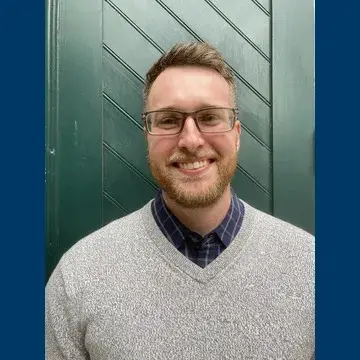
Kevin Sloan, RWU Law Class of 2021
When Kevin Sloan L‘21 was a 2L, he took a course on ocean and coastal law and policy. He already knew he wanted to work in environmental law and policy after graduating. But at this time, he had no intention of entering the world of coastal policy. However, just two weeks into the course, Sloan was hooked.
Now entering his fifth year working at the Rhode Island Coastal Resources Management Council (RI CRMC), Sloan credits that one class with completely altering his career arc.
“By the end of the semester, I had made it a career goal to work in a state coastal program like the RI CRMC,” he says. “As for why the CRMC specifically, the agency has been leading the nation in ocean and coastal management.”
“I would have been happy with any coastal agency, but when the opportunity came to stay in Rhode Island and work for the CRMC, I couldn't pass it up.”
Sloan is currently Federal Consistency Coordinator at RI CRMC. It’s a job where he wears many hats. Some days involve working on Rhode Island-specific matters, such as shoreline protection or regulatory changes. On other days, he reviews offshore wind farms and engages with the State's congressional delegation, the governor's office, and various federal agencies and NGOs.
“It's not a classic 9-to-5 job in that you have to be available to stakeholders when it's best for them, including after hours,” he says. “(You have to) always be thinking three or four steps ahead, and be looking at things on a macro and micro level.”
The work can be quite challenging, Sloan says, noting the time and scale that some projects entail. He says that a large part of his job revolves around managing the CRMC’s offshore wind portfolio. Those projects can take 15-plus years to fully obtain permits at the state and federal levels, and Sloan says they evolve over time.
“Trying to keep track of the changes while keeping stakeholders apprised and doing our best to manage our marine resources and uses is daunting,” Sloan says. “It's a constant balancing act.”
For Sloan, the most enjoyable part of his time at the CRMC has been the people he works with daily.
“These folks are some of the most talented and knowledgeable people I've known, so I'm always learning something new and getting pushed outside of my comfort zone,” he says. “The work itself is really dynamic and fast-paced. I don't do well sitting still, and getting to hop from topic to topic or project to project and get completely immersed makes most every day a fun challenge.”
Having grown up in West Virginia, Sloan says he saw firsthand what it’s like when protecting the environment isn't a statewide priority. He says that he knew he wanted to be part of the solution, not the problem. Sloan worked in the West Virginia state legislature, and he knew he needed to develop a different skill set to achieve the impact he wanted. While looking for law schools, he came across RWU and was drawn to the Marine Affairs Institute.
“After doing some research, I knew that's where I needed to be,” Sloan says. “RWU is a small university in general, but the law school gave a level of access to professors and opportunities I knew the larger law schools I got into wouldn't be able to provide.”
Sloan credits his time at RWU Law for shaping his career path and himself. In particular, he says his courses in ocean and coastal law and policy, environmental law, and administrative law were quite helpful. He also says that one professor he still considers a close mentor is Professor Julia Wyman, Director of the Marine Affairs Institute and the Rhode Island Sea Grant Legal Program. According to Sloan, Professor Wyman took him under her wing during school and gave him access to opportunities he never would have known about or been competitive for otherwise.
“RWU Law changed how I fundamentally see the world,” Sloan says. “The type of strategic and critical thinking taught in law school is really unique, and it lets you see and account for scenarios that others might not see.”