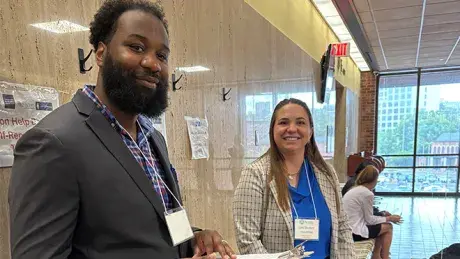
In its third year, the RWU Law program welcomed 39 students, including 18 returning campers, for two weeklong sessions focused on justice, advocacy, elections, and civic engagement.
BRISTOL, R.I. – The courtroom at Roger Williams University School of Law became a television studio on Aug. 11 as WPRI 12 brought four Democratic candidates for Rhode Island attorney general together
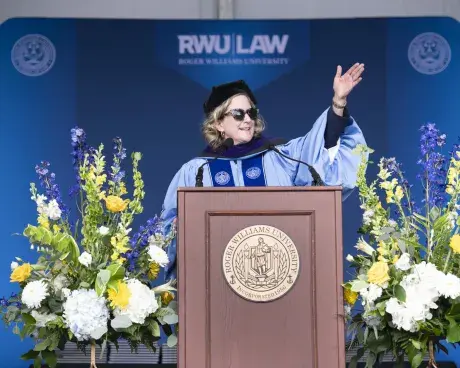
BRISTOL, R.I. – On May 15, the law school celebrated the Class of 2026 with remarks centered on service, mentorship, and community. Commencement speaker Judge Montecalvo encouraged graduates to use
Renowned businessman Dick Sullivan to deliver Commencement address as Roger Williams University School of Law honors U.S. Court of Appeals Judge Lara E. Montecalvo.
“Remarkable job.” That’s how a Rhode Island Superior Court judge described Isiah DiPina L’27’s testimony before state lawmakers, where he shared his family’s experience to advocate for protecting inherited homes from forced sales. It is a powerful example of how personal story, when paired with legal training, can shape policy and create more just outcomes for others.
We have classified RWU Law classes under the following headers. One of the following course types will be attached to each course which will allow students to narrow down their search while looking for classes.
Core Course
Students in the first and second year are required to take classes covering the following aspects of the law—contracts, torts, property, criminal law, civil procedure, and constitutional law, evidence, and professional responsibility. Along with these aspects, the core curriculum will develop legal reasoning skills.
Elective
After finishing the core curriculum the remaining coursework toward the degree is completed through upper level elective courses. Students can choose courses that peak their interests or courses that go along with the track they are following.
Seminar
Seminars are classes where teachers and small groups of students focus on a specific topic and the students complete a substantial research paper.
Clinics/Externships
Inhouse Clinics and Clinical Externships legal education is law school training in which students participate in client representation under the supervision of a practicing attorney or law professor. RWU Law's Clinical Programs offer unique and effective learning opportunities and the opportunity for practical experience while still in law school.