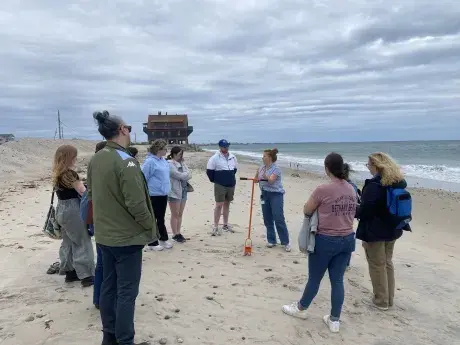
This summer marks a significant step forward for RWU Law's Coastal Resilience Law and Policy Clinic. Now entering its fourth year, the clinic is expanding access beyond RWU Law’s student body. For the first time, visiting students from ABA-accredited law schools will be able to join RWU Law students in this immersive, four-credit experience.
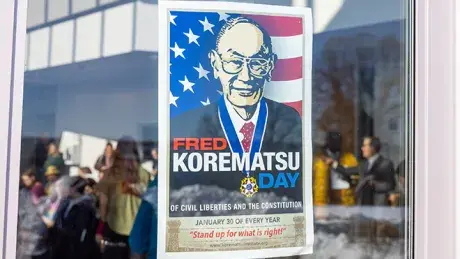
Campus and community leaders came together to reflect on civil rights icon Fred Korematsu’s lifelong advocacy and the continued importance of protecting constitutional freedoms.
Roger Williams University’s Housing Policy Clinic celebrates the hard work of law students, representatives, and coordinators involved with the first Housing Advocacy Clinic Showcase.
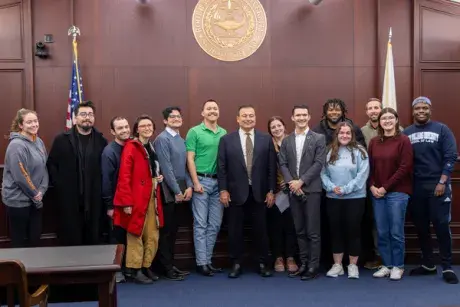
The ninth annual Stonewall Lecture at Roger Williams University School of Law was held on Thursday, November 13, 2025, honoring the LGBTQ+ community and the legacy of the 1969 Stonewall uprising. This year’s guest speaker was Representative K. Joseph Shekarchi, Speaker of the RI House of Representatives.
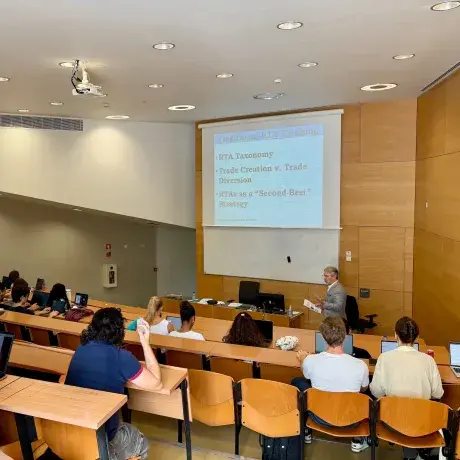
Roger Williams University School of Law is furthering its international reach and educational mission through an emerging collaboration with Portugal’s esteemed Faculdade de Direito da Universidade de
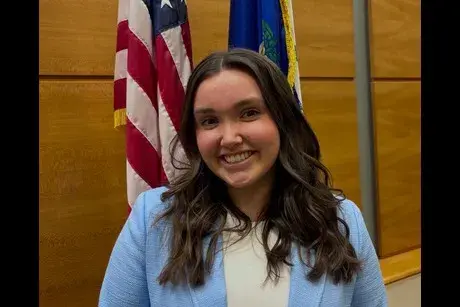
Through Roger Williams University School of Law’s Alternative Spring Break (ASB) program, Alexis joined the Connecticut Division of Public Defenders in Waterbury. There, she was paired with RWU Law alumni Kacey Stone ‘22 and Amanda Caron ‘24, who mentored her.
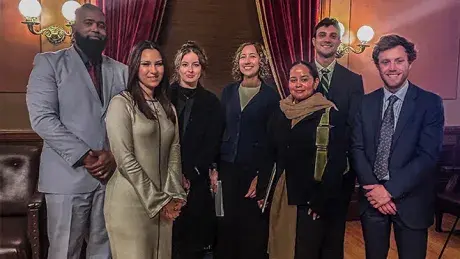
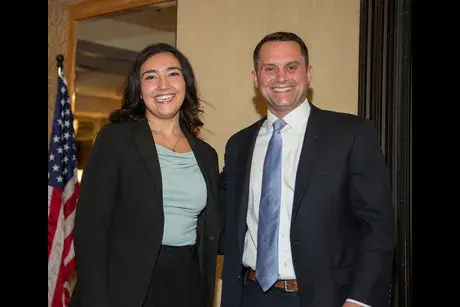
Two members of the Roger Williams University School of Law community—Michelle Alves M'00 L’03 (double Hawk) and 2L Gianna J. DelMonico —were among this year’s honorees at the 43rd Annual Neil J. Houston, Jr. Memorial Awards, hosted by Justice Assistance, a Rhode Island nonprofit led by CEO Jake Bissaillon L’16.
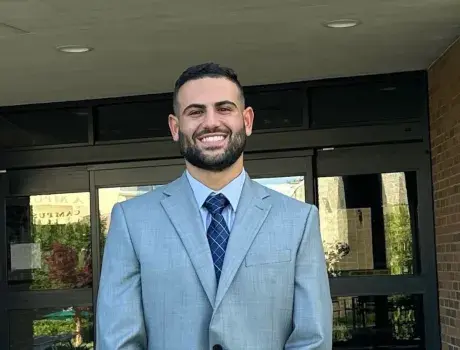
Zaki Farah’s mission is to make courtrooms places of fairness, not fear. The son of Syrian immigrants, he faced the justice system at sixteen—arrested and detained with little guidance—revealing firsthand the gaps that drive his fight for a more just system.
We have classified RWU Law classes under the following headers. One of the following course types will be attached to each course which will allow students to narrow down their search while looking for classes.
Core Course
Students in the first and second year are required to take classes covering the following aspects of the law—contracts, torts, property, criminal law, civil procedure, and constitutional law, evidence, and professional responsibility. Along with these aspects, the core curriculum will develop legal reasoning skills.
Elective
After finishing the core curriculum the remaining coursework toward the degree is completed through upper level elective courses. Students can choose courses that peak their interests or courses that go along with the track they are following.
Seminar
Seminars are classes where teachers and small groups of students focus on a specific topic and the students complete a substantial research paper.
Clinics/Externships
Inhouse Clinics and Clinical Externships legal education is law school training in which students participate in client representation under the supervision of a practicing attorney or law professor. RWU Law's Clinical Programs offer unique and effective learning opportunities and the opportunity for practical experience while still in law school.